Home / Services / Dental Implants

A replacement root, not just a replacement tooth.

A titanium post takes over the job your natural tooth root used to do — holding a crown that looks, feels and chews like the real thing, without touching the teeth beside it.

How it works

Planned on a scan, not a guess

Every implant case here starts with a 3D scan of your jaw — it shows us bone density, nerve position and the exact angle an implant needs to sit at, before we ever pick up a drill. That planning step is what keeps the painless-implant protocol painless: less exploratory drilling, fewer surprises mid-procedure, and a crown that fits the bite you actually have.

Depending on how much bone is available, a case can move straight from scan to placement, or may need a bone graft first. Either way, you'll see the plan on screen before deciding.

  • 3D-scan-guided placement for precise depth and angle
  • Laser-assisted gum handling for faster, calmer healing
  • Single-tooth, multi-tooth and full-arch options
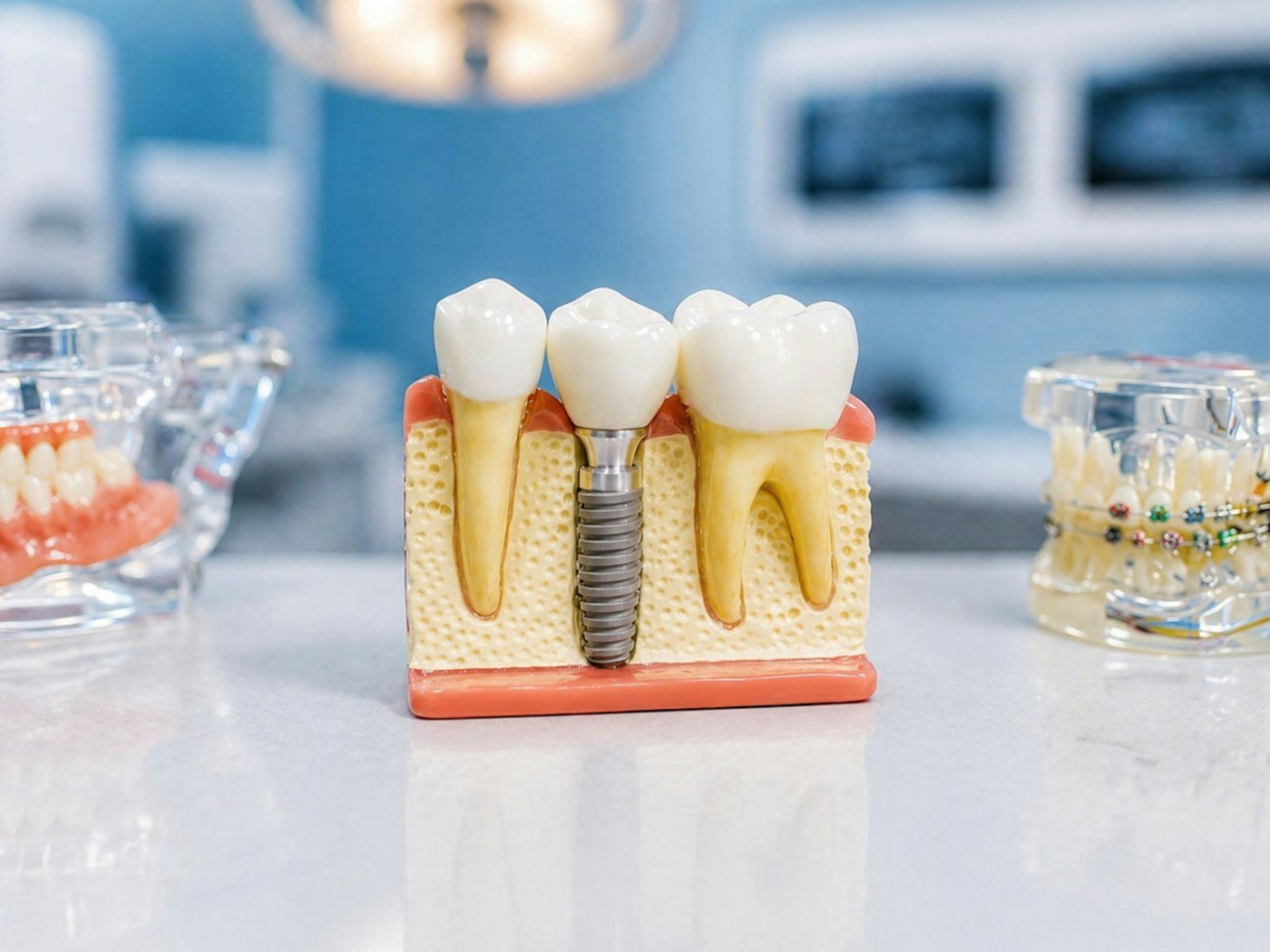
A dental implant model showing the titanium root, abutment and crown
The process

From scan to finished crown

01

3D scan & consult

We image the jaw and talk through what a single-tooth or full-arch plan would involve.

02

Implant placement

The titanium post is placed under local anaesthesia, laser-assisted where useful.

03

Healing period

8–16 weeks for the implant to fuse with the bone (osseointegration), checked along the way.

04

Crown fitting

A custom crown is fitted and adjusted to your bite in the final visit.

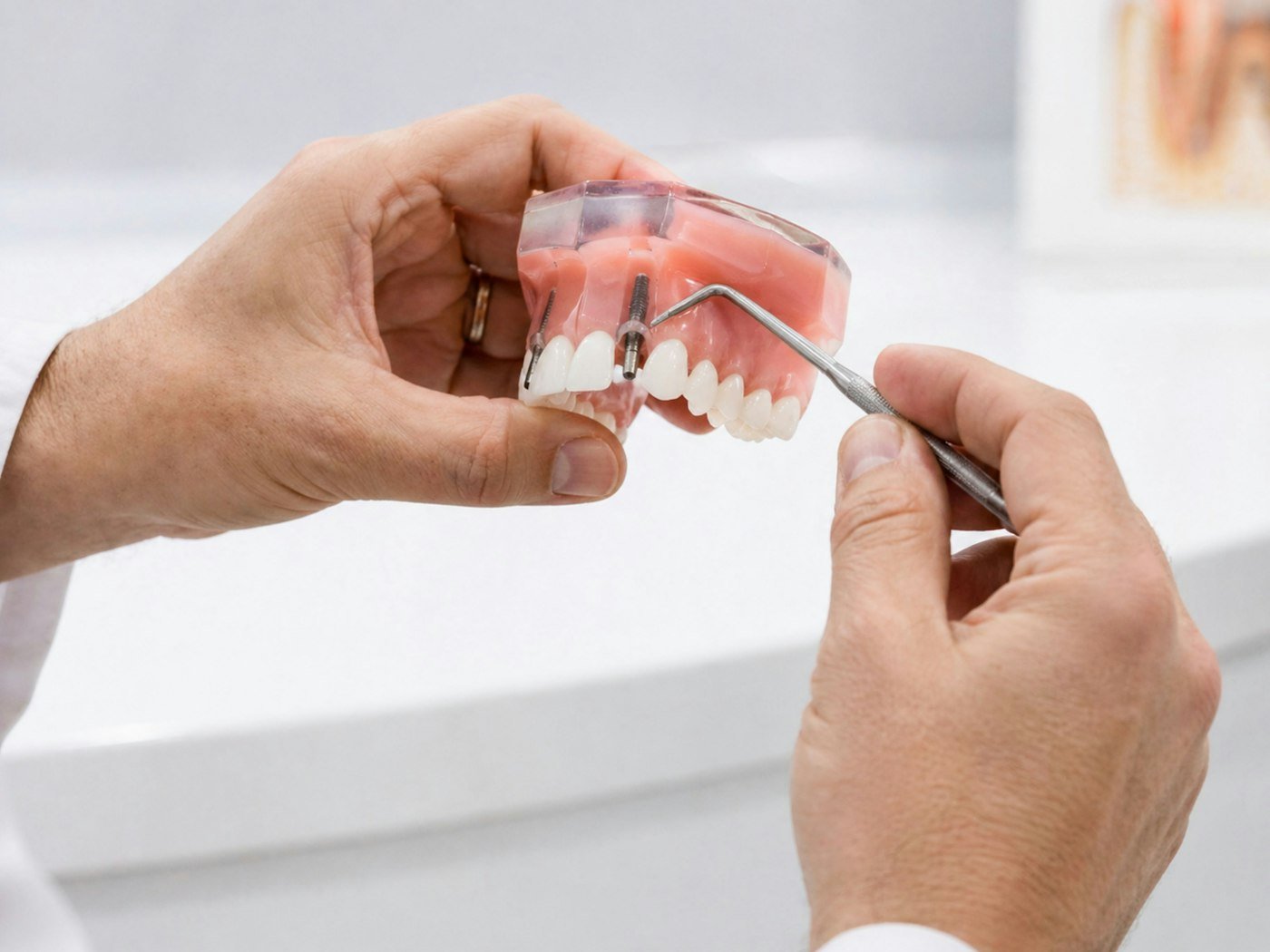
A dentist pointing to a dental implant model during a patient consultation
Is it right for you

Good candidates for implants

Most healthy adults with adequate jawbone are candidates, whether replacing one tooth or several. Implants are especially worth considering if you're missing a tooth and don't want to grind down the healthy teeth beside it for a bridge, or if a loose denture has become more frustrating than functional.

Smoking, uncontrolled diabetes and low bone density can complicate healing — none of these rule an implant out automatically, but they're exactly what the consultation and scan are for.

Typical timeline8–16 weeks, scan to final crown
Visits3–5, spaced through healing
Downtime2–4 days of mild swelling
AnaesthesiaLocal, laser-assisted where useful

Start with a scan, not a decision

Book a consultation and 3D scan to see exactly what your case needs — no commitment required.