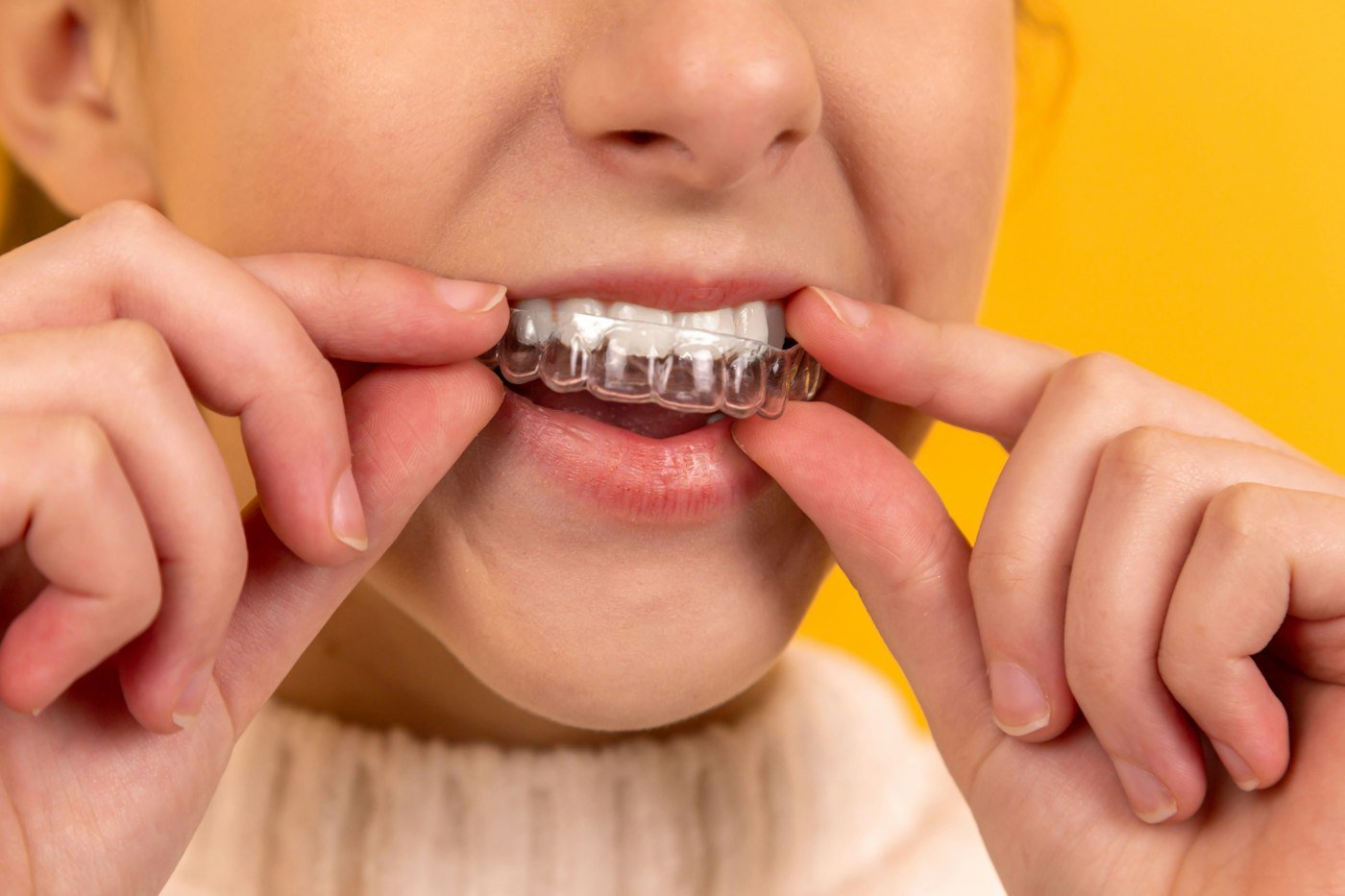
A series of clear, custom-moulded trays gradually move your teeth into place — removable for eating and brushing, and far less visible than metal wires.
Treatment starts with a scan or impression of your teeth, which is used to plan every stage of movement in advance and manufacture a full series of aligners specific to your case. You wear each tray for 20–22 hours a day, swapping to the next one on a schedule your dentist sets — typically every one to two weeks — as your teeth gradually shift toward the final position.
Because the trays are custom-fit to each stage, movement is more predictable than with removable retainer-style devices, and — unlike fixed braces — you can take them out to eat, brush and floss normally.
Clear aligners handle most crowding, spacing and mild-to-moderate bite issues well, and are the more discreet, comfortable option for adults who want to avoid the look of metal. Traditional wires and braces remain the more reliable choice for complex bite corrections or younger patients who may not consistently wear a removable tray for the required hours.
We'll tell you plainly at your consultation which category your case falls into — not every case is a good aligner candidate, and we'd rather say so upfront than sell a treatment that under-delivers.
| Typical duration | 6–18 months |
| Visits | Every 4–6 weeks for progress checks |
| Daily wear | 20–22 hours, removable to eat |
| Visibility | Clear, minimal to unnoticeable |
No — aligners are used from teenage years through adulthood. What matters more than age is how much correction your bite needs and whether you'll reliably wear the trays for the required hours each day.
Most people notice a slight lisp for the first few days with a new tray, which resolves as your tongue adjusts. It's rarely noticeable beyond the first week.
Yes — as with any orthodontic treatment, teeth can drift back without a retainer. We'll fit one as part of the final stage of your plan.
Both correct crowding and bite issues; braces use fixed wires and brackets, while aligners are a series of removable clear trays. Braces generally suit more complex corrections and younger patients; aligners suit patients who want a more discreet, removable option for mild-to-moderate cases.
A short consultation and scan will tell you exactly what aligners can (and can't) fix for your bite.